Not a course
There's nothing to learn before you use it. If you know how to talk to Claude, you know how to use robOS on day one. No lessons, no modules, no homework.
Work for as many clients as you want, from the same robOS. Each one gets its own room, with its own voice and history, and you pay the same for one or for ten.
Look at any other system built on Claude Code: this is exactly what you will not find.
so it's clear from the start
Three things worth knowing before you mislabel it.
There's nothing to learn before you use it. If you know how to talk to Claude, you know how to use robOS on day one. No lessons, no modules, no homework.
Each skill is a tested working machine, with its own logic, declared dependencies and verification. Not a prompt copied from somewhere. The difference between an engine and a photo of an engine.
The same one I use daily to solve complex work on Claude. I didn't build it to sell it; I sell it because I use it. The difference between a recipe book and a kitchen already fully equipped.
where the value is
As AI gets better, building an automation keeps getting cheaper and easier. You barely need any technical skills anymore. The hard part is knowing what to automate: not just what annoys you today, but what's actually holding you back. And seeing where AI helps and where it doesn't.
A pharmacist hands you exactly what you asked for. A doctor works out what you actually need. In AI, the builder is the pharmacist. The one who decides is the doctor. And the doctor is the one who gets paid.
robOS keeps you in the doctor's seat. You say what you want solved, it handles the doing, the memory, and the checking. You don't become a programmer. You become the person who knows what's worth doing, with a system that handles the rest.
the problem
Yes, Claude has had memory since March 2026. It writes a summary every 24 hours, saves what it decides to save, and you don't see exactly what was kept and what was left out. You can't separate one workspace from another inside its memory.
If you work across multiple workspaces, you end up repeating the same things in every new conversation. Not because it forgets entirely, but because it remembers without order.
robOS adds order, discipline and verification on top of what Claude already does well.
what happens without structure
Without persistent memory, you repeat context from scratch in every new conversation. Yesterday you explained everything. Today you start over.
Without methods that learn from your feedback, every result sounds the same. What it writes for you is identical to what it writes for anyone else.
Without verification, you get answers that sound good but don't hold up. You publish them, then find out too late they were invented.
Without workspaces, when you switch clients you lose all the previous context. Tone, decisions, history. Everything has to be rebuilt manually.
comparison
Same tasks, two ways of working.
Claude decides on its own what to keep and what to drop, without asking you
You see everything that's been saved, search through it, export it whenever you want
You lose what you built last month
Everything you've built accumulates, searchable in 2 seconds
Claude answers even when it's not sure about what it's saying
When it doesn't know, it asks
You re-explain each workspace context every time
Each workspace context loads automatically
Copy-paste between 8 open windows
One place for everything
Working method reinvented every time
Ready-made methods that learn from feedback
what robOS adds
Ordinary AI chats start over every time. robOS remembers what you are working on, what you decided and what you learned, day after day. The memory writes itself while you work; with other tools, notes only exist if you ask for them, every single time. The next day you pick up where you left off.
Open the terminal and robOS already knows where you left off yesterday. No recaps, no „let me remind you where we were".
Everything you have worked on gathers in one place that is yours, and you find it in two words, whether it was today or three months ago.
If you closed abruptly or a task was left unfinished, it brings it back to you instead of burying it.
Important choices stay written with their reasoning. Six months later you don't reconstruct from memory, you have them noted.
You give it your materials (site, profile, a deck) and robOS builds a map of who you are and what you do, the "second brain" idea on top of an AI model popularized by Andrej Karpathy, a model Google Cloud standardized in June 2026 as the Open Knowledge Format. From then on, when it writes about you or your business, it uses your real facts, not guesses. And each workspace has its own brain: what it knows about one client never mixes with another.
Your second brain, seen as a living map. Each dot is a topic; the lines are the links between them.
Drop a file, a link or some text and it gets added to the brain on its own, no command needed
See everything it knows as a living map, not a list you scroll
Delete or clean up what is no longer relevant, from one place
"I don't know" is a first-class answer, not a weakness.
Before writing anything important, it checks whether it can back up each claim
If it can't, it says "I don't know, I'll ask", it doesn't invent
When a skill is missing for what you asked, it says so directly. No workaround improvised.
"I don't know" is a first-class answer, not a weakness
you:
Write an article about 2026 SEO trends with concrete numbers
robOS:
I found verifiable data for 4 out of 6 points. For the other 2 I don't have reliable sources, I'd rather skip them than invent. Want me to continue with the 4, or will you find the sources for the rest?
A workspace is your container: a client, a personal project, a partnership, a product line. Anything you'd want to keep separate. You switch with one command.
All context switches automatically: voice, brand, memory, output
Tomorrow you open the terminal, you're still in the same workspace
The price doesn't grow with the number of workspaces
"which client is active"
see who you're working for now
"switch to Flavor Bistro"
everything changes automatically
"client root"
back to your base space
Voice: warm, personal, host tone
Audience: urban 25-35, foodies
Tasks: recipe article, Instagram post, newsletter
Last session: Tuesday, newsletter draft
Voice: professional, trustworthy, empathetic
Audience: patients 30-55, dental anxiety
Tasks: FAQ article, Google review response
Last session: Monday, competitor audit
One command. All context switches. Nothing to configure manually.
$ switch to DentPro Clinic
Active workspace: DentPro Clinic
voice: professional, trustworthy, empathetic
audience: patients 30-55
last session: Monday, competitor audit
Workspace memory loaded. 3 open threads.
Are several of you on the same clients?
robOS Team puts the whole team on the same workspaces: the same brand voice, the same notes, the same working memory. A separate add-on, on top of robOS.
See robOS Team →Want it working while you sleep?
robOS alwaysON moves your robOS to a server you own, running non-stop: jobs run overnight and you talk to it from your phone. I do the installation, included in the price.
See robOS alwaysON →Not sure which combination fits you? See the add-on map →
robOS asks you too, it doesn't just execute
Most tools sit and wait for you to know exactly what you want. robOS also works the other way around: when it matters, it asks you the questions and pulls out what counts. You don't start from a blank page, you answer one prompt at a time, and at the end it's all written down and reused everywhere.
You type: "onboard me"
15 minutes of simple questions, and robOS knows you: who you are, what you do, how you talk. From then on it writes for your real situation, not a generic one.
You type: "brand voice"
It learns how you write, so everything that comes after (articles, posts, emails) sounds like you, not like a robot.
You type: "ideal client"
It asks until it's clear who you sell to and what hurts them. From there, the message starts to land.
You type: "positioning"
It guides you to the angle that sets you apart, when you sound just like every competitor.
You type: "grill me"
It takes a plan apart with hard questions and finds the holes before they cost you money. You come out with the plan stronger, not flattered.
You type: "level up"
A few targeted questions, then it tells you the next step actually worth automating. No guessing on your own.
You don't need to know what to ask. robOS does. You just answer.
a working day
Open robOS, see what was left unfinished yesterday
Continue yesterday's task, without re-explaining context
Write copy for Flavor Bistro, with their voice auto-loaded
Switch to DentPro with one command
When the AI doesn't know a detail, it asks instead of improvising
Daily memory saves itself
what you can do with robOS
You don't pick from a menu and you don't memorize command names: you say where you want to end up, in plain language, and the system builds its own steps and picks the right tool out of 800+ ways to ask. 50+ skills ready on day one, dozens more you turn on when you need them. The list below is just so you can see what's in the box.
You type: "make short clips from this 45-min video"
robOS recognizes the phrase, picks the right skill and app itself and starts. You didn't choose from a menu, you didn't know the name, you didn't have to. And if your request could mean several things, it asks before starting: it doesn't assume and it doesn't pretend to know.
Give an input, get a published result.
YouTube to short clips
TikTok, Reels, Shorts, burned-in subtitles
Idea to social post + images
7 scenarios: text, video, theme, repurpose
YouTube to PDF ebook
Magazine style, feature article, not a summary
Topic to HTML presentation
Navigable deck, PDF export
you:
I have a 45-min YouTube video about 2026 marketing trends. Make short clips.
robOS:
Extracted 5 key moments from the transcript. Clip 1: "Retargeting is dead" (42s). Clip 2: "Email beats social" (38s). Reframe 9:16, burned-in subs, face tracking. Published on TikTok + Reels + Shorts.
Have your own methods? Add them in the same format. They integrate just like the included ones.
Some skills use external services: Zernio (publishing across 13 platforms), Apify (LinkedIn scraping), OpenAI (AI images), HyperFrames (motion video), WhisperX (local transcription). Each has a free tier or low cost. Details and required keys in .env.example at install time.
this came out of robOS: a whole series from one podcast
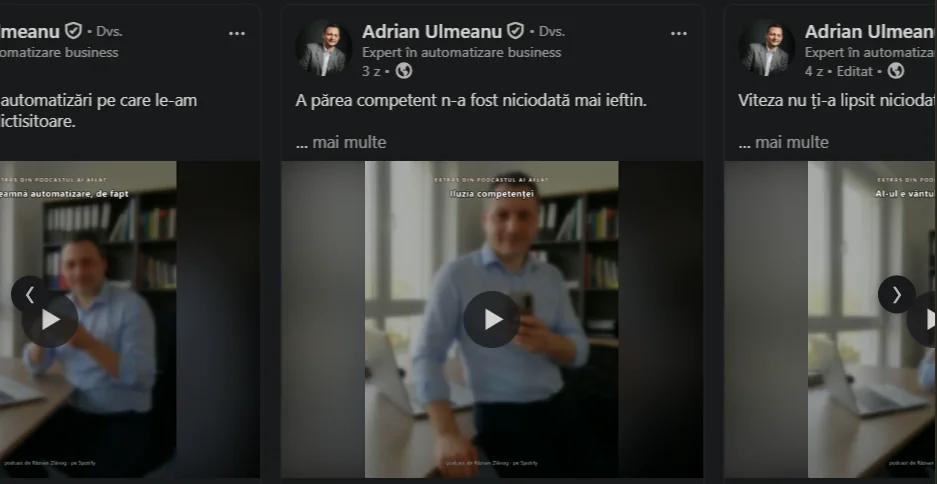
Six vertical clips for LinkedIn, pulled from a single podcast, with subtitles and scheduled one a day.
this came out of robOS: posts, visuals included
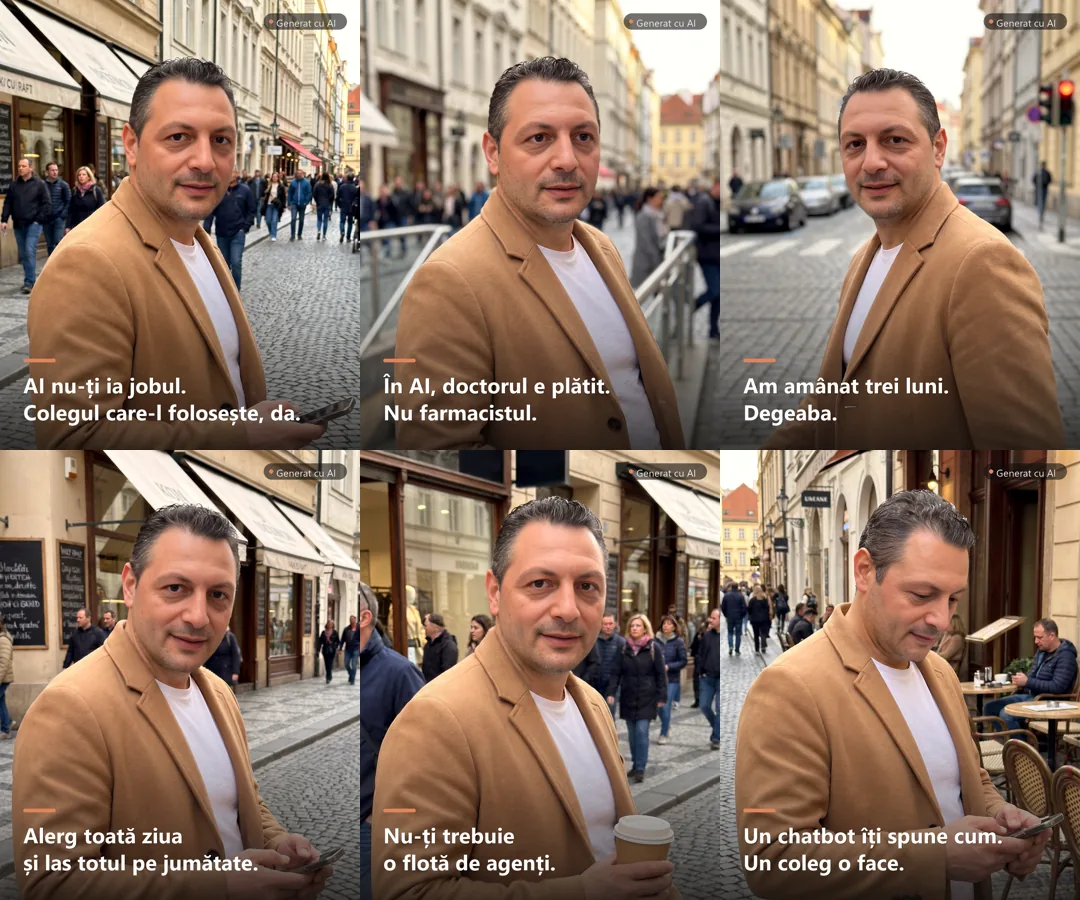
Six LinkedIn posts, copy and image, written, laid out and scheduled from robOS, one a day. The visuals are AI-generated and carry the label right on the image.
connects with your tools
You don't need to know which app does what. You say what you want and robOS picks the right tool itself (and if it isn't clear, it asks). robOS starts with no external account at all. When you want more, you connect it to the tools below through a browser login or a key you set once, no code and no complicated setup. You add them when you need them, not all upfront.
the subscriptions you already pay for
Most companies pay for two or three AI subscriptions every month and use them one at a time on a phone, copying text from one place to another. robOS connects them to your actual work: your brand, your clients, your files. One login each, nothing extra to pay.
One request, with a link to one of your own articles. robOS reads it, picks the visual direction and delivers the image on your brand, on the subscription you already pay for.
Your ChatGPT account
Images for posts, ads and presentations, generated on your own subscription, with no cost per image. Including from a photo of you, moved into a different scene with the same face. Plus a second opinion on important work, from a different AI.
Your Google account
Turns your documents and PDFs into an audio podcast, a summary, a mind map, a quiz or a deck through NotebookLM, on the plan you already have.
You choose every time
When you ask for something, robOS checks what you have connected, tells you your options and what each one costs, then recommends one. It never quietly sends you to the paid path.
creation & voice
research & web
publishing & ads
office & comms
this came out of robOS: a whole course
A whole course: 11 modules, 52 lessons, each in several formats. Started and taken all the way to publish, from robOS.
automations
Daily reports, monitors, validations. Scheduled to run on their own.
At 8am you see yesterday's report. On Mondays you get a review of what was learned last week.
You don't have to start anything. The system works in the background.
You lead. robOS handles the routine.
honesty
It does NOT replace Claude.
All the reasoning, writing, decisions. Claude does those.
It does NOT work without Claude Code.
If you don't have an Anthropic account, you don't have a product.
It is NOT an app with a login.
It runs on your laptop. Your data stays with you.
full costs, no surprises
Your Claude subscription
What you already pay. No increase.
robOS
One-time payment.
Dedicated server. NOT needed.
Other subscriptions. NO.
Monthly robOS fees. NO.
Total = what you already pay + robOS, once = everything.
install
30 seconds.
Guided onboarding, about 10 minutes.
robOS is already there.
If you know how to talk to Claude, you know how to use robOS.
is it for you?
who built robOS

Founder, RoboMarketing
30+ years in IT and automation. I build complex AI agent systems for my own projects and for clients. robOS isn't a product I made to sell: it's the tool I actually work with every day, which I decided to hand over ready to use.
"When you feel you need one more person, you probably need smart automations."
community
real feedback
Real operators, real businesses. Messages and comments from robOS users.
“You've built something seriously good. I'm a very non-technical person and I'm impressed. I use it every single day since I got it, I'm sure I'm using under 5% of what it can do, and it has already significantly improved the quality of my work.”

Tiberiu Oprea
Co-Founder, BRAVEMENT
“The difference between an AI that answers and one that already understands your business context is exactly the difference between a tool and a trusted colleague, or, more precisely, between plain Claude and Claude paired with robOS.”

Viorel Anghelina
SEO Specialist, AXA Direct
“After seeing what robOS can do for me, the license is the best investment I've made since I started doing marketing. And I don't mean the money, I mean what it lets me do from here on.”
George Iftimie
Liquidads Marketing
“Adrian Ulmeanu builds intelligent, useful machines with the dedication of a master craftsman, a Geppetto. It is the real deal. A sound vision of agentic AI produces quality.”

Mitruț Remus-Dănuț
Cognitive & Personality AI Architect
“I've had so many eye-opening moments since I started to understand, and to make it understand, what I do on robOS that I'm lost for words. Truly!”

Adrian Iacob
SEO Specialist, Google & YouTube
“What have you done to me... I'm on steroids, I just upgraded to Claude 'max'. Now I'm trying to convince my husband he needs robOS too. ❤️”
Diana Tulbure
“I want to shout for joy when I see what I could build with simple, second-grade commands placed inside a well-set-up stack. I'm glad to be part of this community.”
Amelian Valentin
Digital marketer
“I installed it from zero in under 30 minutes on a clean Windows. After install, the system ran its own onboarding: who I am, what I do, for whom. Basically I had a business set up from scratch: branding, positioning, goals.”
Razvan Bordeanu
Entrepreneur, AI automation
“All the files I built and refined over the years, brand identity, client avatar, DNA, I just uploaded them. I no longer had to sit and think what to answer. I saved a ton of time and tokens.”
Livia Ioana Florea
Brand & Business Strategist
“robOS is a Ferrari. Last night, in a few minutes, it created materials for 5 platforms starting from an idea of mine. It already had my expressions, my way of writing.”
Adriana Radu
Brand strategist
“I was scared, overwhelmed by a new interface. Then I exported everything from Claude and told it to create my clients, each with their own projects. It got to work and I was stunned.”
Alexandra Nicolae
Marketing
“I used to pay developers. In the last 2 months I had a single $2k invoice. Everything else I built with Claude and robOS, very complex things that would have cost $15-30k if I'd done them with the devs.”
Adrian Ciocirlan
Founder, seoclub.ro
including this
The page you are on right now also came out of robOS.
The copy, the structure and the animation up top, all built in it. I am not describing it to you: you are looking at an example right now.
including the videos. the prompt, as written in robOS:
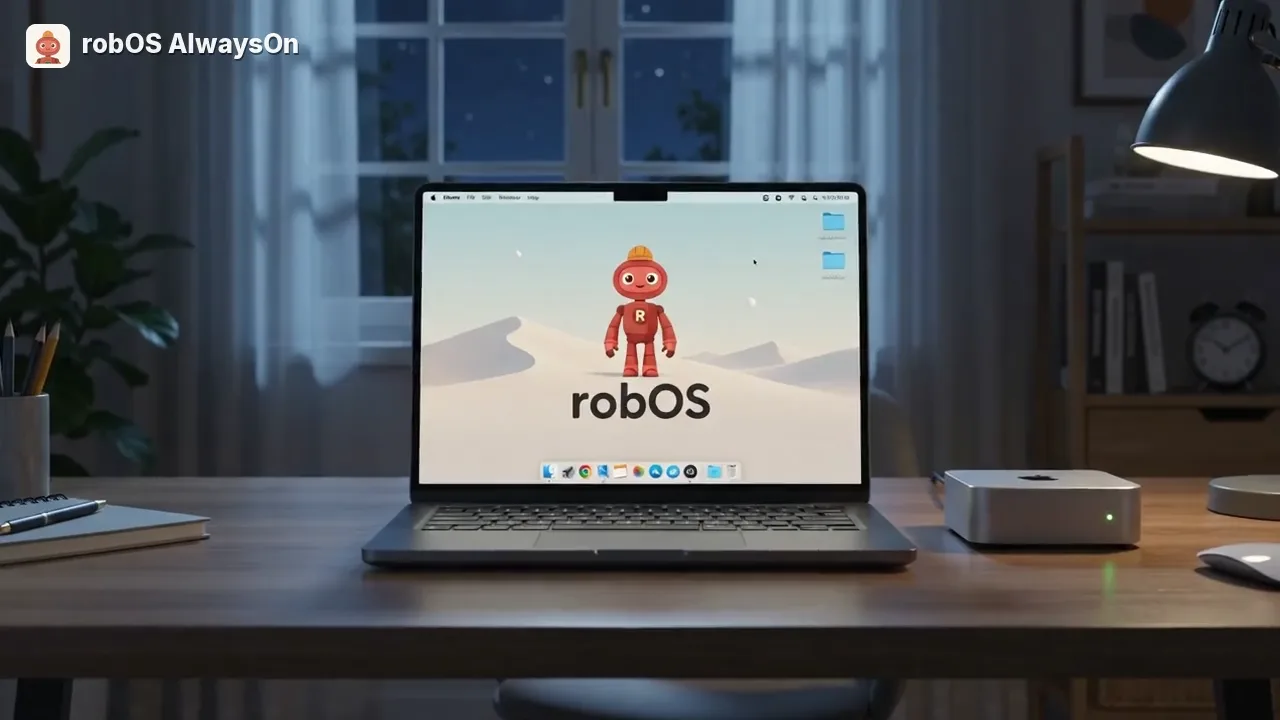
Night. A cozy home office lit only by moonlight through a window. A laptop on the desk, its screen showing a clean minimal light wallpaper with a small cheerful red toy robot mascot wearing an orange hard hat and the word robOS written once in bold dark lowercase-r letters under the mascot. The laptop slowly closes by itself and its screen goes dark. [...] Slow cinematic push-in, calm confident mood, photorealistic with a subtle playful touch.
The frame that came out of the prompt on the left, now the video on the alwaysON page.
see yourself here?
robOS isn't for "someday." It's for the things that come back month after month and eat your time. You say what hurts in plain words, it picks the tool.
You stop scouting the competition yourself.
You say "show me what my competitors are up to" and get the clean picture, with sources. You decide, you don't dig.
You stop staring at the blank page.
An idea becomes an article in your voice, then 8 native posts, one for each network.
You stop copy-pasting across 8 windows.
One piece goes out scheduled on every channel, from one place, at the time you choose.
You stop writing every message and review by hand.
They come out in your brand's tone, ready to send once you approve. You just say yes.
You stop spending Sunday night on the report.
It runs overnight on its own. In the morning you have the report and what was learned, without asking.
You stop guessing what to automate.
You ask, and it tells you the next step that actually matters, with a few sharp questions.
// this came out of robOS: an offer page for a client
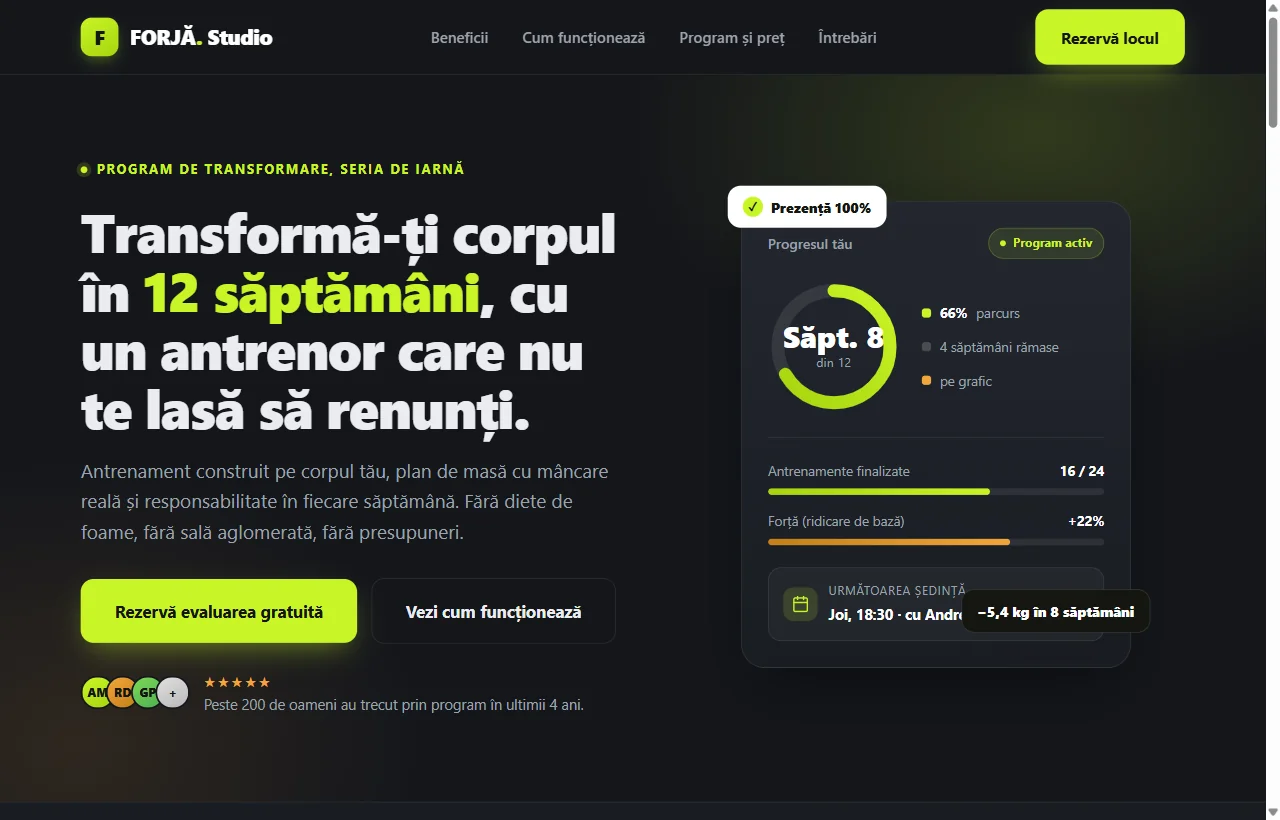
A presentation page for a client's offer, written to sell and put online the same day.
not talk, finished work
Not a promise. It's the tool I work with daily. A few things that came out of it, each in the voice and brand of whoever I made it for.
One long podcast turned into a LinkedIn series: 6 video clips with captions, scheduled on their own, one a day.
A landing page for a client's offer, written to sell and put online the same day.
A full week of social posts, native to each network, from a single article.
A set of 11 onboarding tutorial videos for a client, with real product captures and their brand voice.
A competitor brief: what the rivals say, where the gaps in the market are and how you can stand apart, with sources.
A full course: 50 lessons, each in 5 formats, started and finished in a few hours of work.
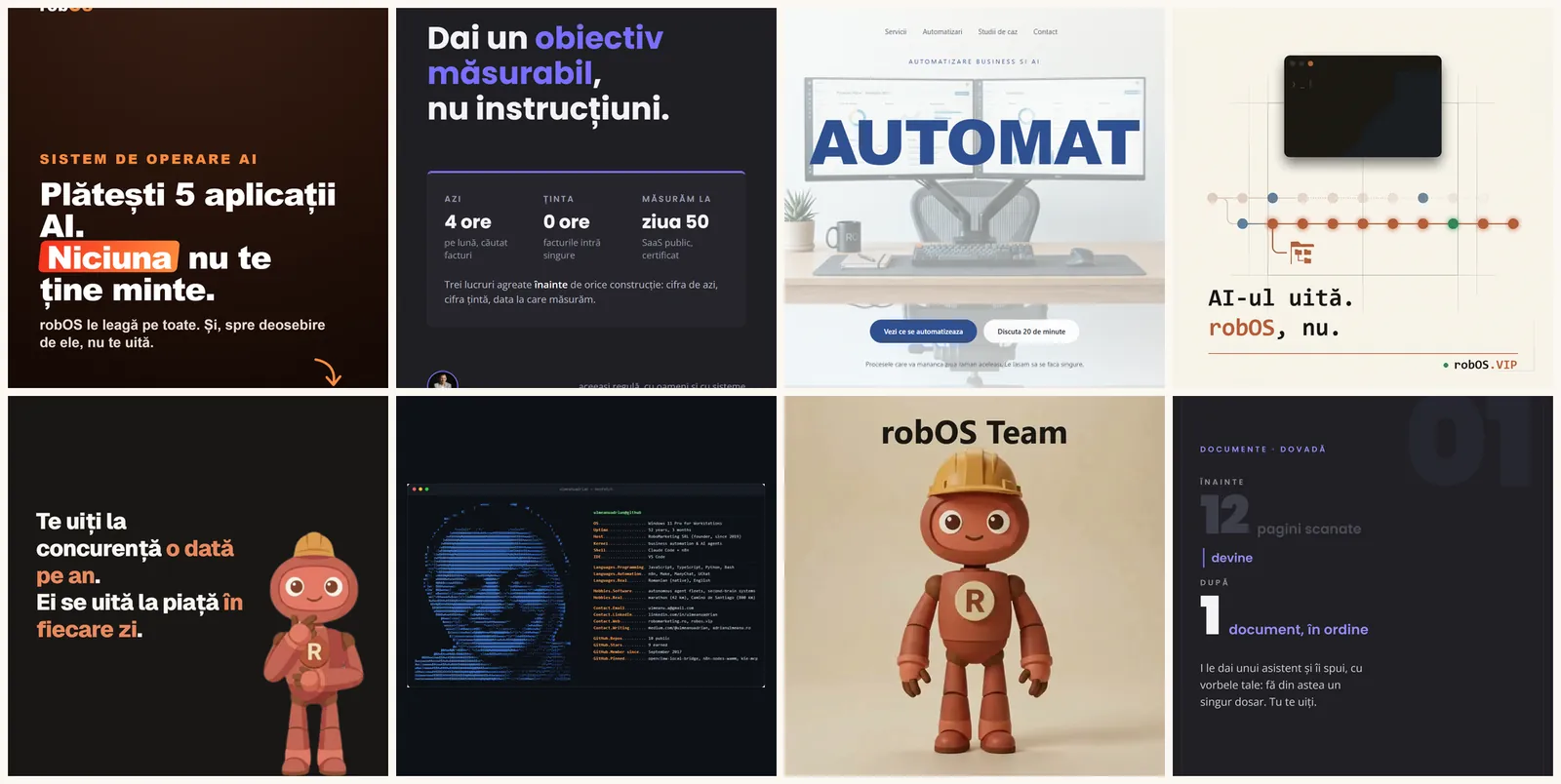
Eight of them, as they look: posts, carousels, pages, decks, video. A few contain AI-generated images.
21 real projects in two months. And each took less time than the one before.
robOS reuses what it built yesterday: the tenth project starts from the other nine. The work didn't get easier, the system compounds.
You say what you need, in plain words. robOS picks the tool and does it, in your voice.
access
Access robOS
One-time payment, no subscription. I give you the details myself, on WhatsApp.
You're not buying features. You're buying a Claude that knows you and stays yours.
✓ From tomorrow you stop re-explaining who you are and how you work. It already knows.
✓ From tomorrow you stop repeating the same correction. You teach it once, it keeps it for life.
✓ From tomorrow the working day writes itself down. You just work.
✓ From tomorrow every client has its own room, and you never work on the wrong one by mistake.
✓ Everything you build compounds and stays on your computer. You leave with it anytime.
A system that knows you, works in your name and stays yours.
frequently asked questions
next step
Message me and I will answer you myself, before you decide.
 📖
🪢
zzZ
👍
👋
→
📖
🪢
zzZ
👍
👋
→